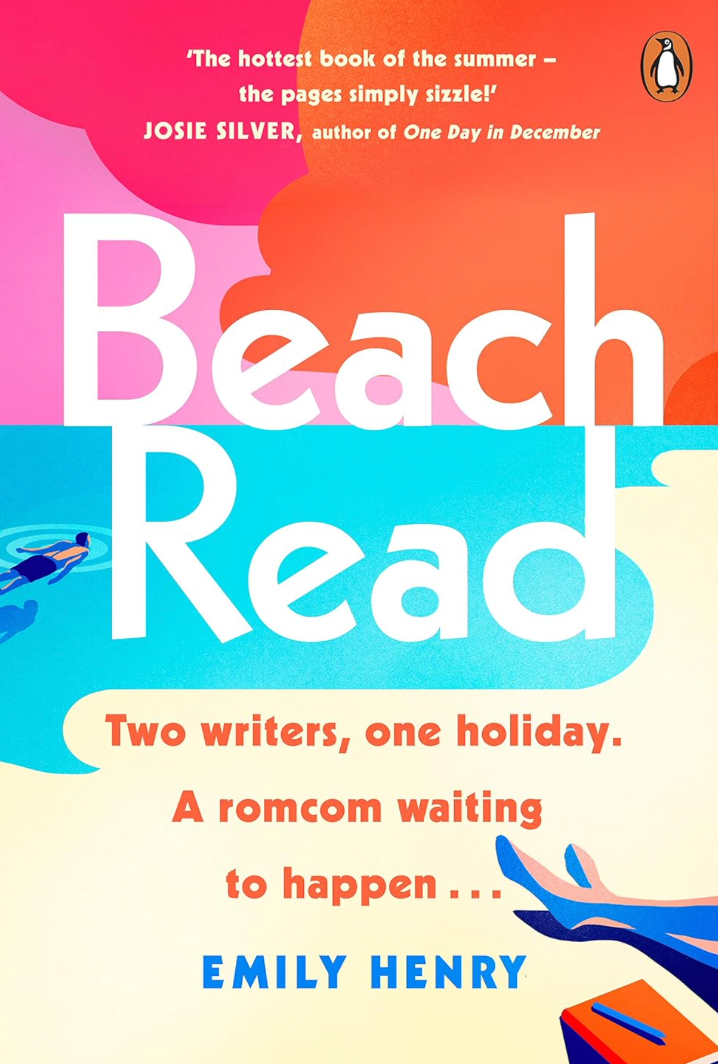
BEACH READ by Emily Henry

A love story about stories. And the terrifying courage of believing in love again.
There are romance novels.
And then there are books about what it costs to believe in romance.
Beach Read is the latter.
At first glance, it feels deliciously trope-driven:
Two writers.
One summer.
Opposing worldviews.
A bet that forces them to swap genres.
But beneath the banter and sexual tension, Emily Henry is writing about something far more intimate; the collapse of identity when the story you’ve told yourself about love stops making sense.
January Andrews believes in grand gestures, golden light, cinematic destiny. She narrates her life like a film soundtrack is always swelling somewhere behind her. Gus Everett does not. He believes in grief. In realism. In the uncomfortable weight of truth.
And what makes this novel extraordinary is not that they fall in love.
It’s that they both have to dismantle themselves first.
The Writing
Emily Henry writes like someone who understands that humour and heartbreak are siblings.
Her prose moves from sharp, whip-smart banter to emotional gut punches without warning. One moment, you’re laughing at the competitive absurdity of writers on a genre-swap dare; the next, you’re staring at a line that quietly wrecks you.
There is a tenderness in the way Henry writes grief. January’s disillusionment with her father, her mother’s silence, the unravelling of what she thought love looked like; it isn’t melodrama. It’s quiet devastation.
And then there’s Gus.
He isn’t written as a fantasy. He’s written as a contradiction, guarded but perceptive, cynical yet deeply observant, wounded but never self-pitying. The tension between them isn’t just physical (though yes, the chemistry simmers beautifully). It’s ideological.
They don’t just want each other.
They want to be understood.
The Romance
The romantic tension here is slow, deliberate, intelligent.
This isn’t insta-love. It’s not even particularly soft love at first.
It’s intellectual attraction. Creative rivalry. Mutual irritation turning into reluctant admiration.
The way they challenge each other; forcing each other to write outside comfort zones, to face uncomfortable truths, to sit with pain instead of decorating it; becomes foreplay of the most compelling kind.
Their intimacy builds through conversations. Through shared vulnerability. Through the terrifying act of saying, “This is who I really am.”
And when the romance finally deepens, it feels earned.
It feels adult.
It feels like two people choosing each other despite their fears, not because of them.
The Themes Beneath the Beach
What makes Beach Read stand apart from standard romcoms is this:
It interrogates the idea of happily ever after.
January believes in love as a saving force; something that dances in the kitchen when life gets dark.
But what happens when you discover love is flawed? Human? Messy?
Gus believes love is complicated, compromised, bound to reality. But what happens when someone makes you want to believe in something brighter?
This novel isn’t asking, Will they end up together?
It’s asking:
Is love naïve, or is cynicism just fear dressed as intelligence?
Can you write joy if you’ve stopped believing in it?
Is hope foolish, or brave?
Why It Stays With You
Over 1 lakh readers have reviewed this book.
But what makes it unforgettable isn’t just the banter or the steam.
It’s that it feels self-aware.
It understands the criticism of romance as a genre, and gently dismantles it.
It understands that grief and love coexist.
It understands that sometimes, the bravest thing a person can do is risk believing in a beautiful story again.
And maybe that’s why it resonates so deeply.
Because at some point, we’ve all been January.
And at some point, we’ve all been Gus.
Final Verdict - 5 / 5
Beach Read isn’t just a summer romance.
It’s a book about writers who don’t know how to write anymore.
About lovers who don’t know how to trust anymore.
About people who must decide whether hope is worth the humiliation of being wrong.
It will make you laugh.
It will make you ache.
And somewhere between the lake house and the last page, it will quietly ask you:
What story are you telling yourself about love?
For the banter.
For the bruised hearts.
For reminding us that believing in love is not weakness, it’s courage.


Comments